| directory |
| home | contact |
|
|||||||||||||||
| search | |||||||||||||||
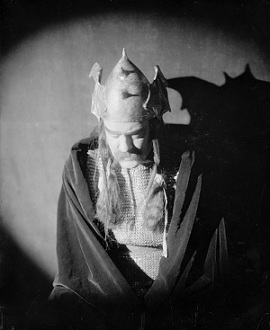
Macbeth's Soliloquy: To be thus is nothing (3.1.47-71)CommentaryMacbeth has killed Duncan and has become king of the Scots, yet he believes his crown is in jeopardy. The menace is Banquo. Like Macbeth, Banquo knows that there were two key parts to the unearthly revelation: first, that Macbeth will become king, and second, that Banquo will beget future kings. Macbeth fears Banquo is planning a coup to hasten the day of triumph for his heirs. Macbeth's mistrust of Banquo causes him to dwell on the Witches' prediction that he will have no successors of his own. Thinking that he has murdered Duncan to secure the throne for Banquo's offspring, Macbeth's unease grows to ferocious enmity as he vows to crush Fate's kingly plans for Banquo's children. A comparison between the above soliloquy and Macbeth's previous soliloquies in 1.7 and 2.1 reveals a key change in his character. Macbeth is again contemplating murder, but what impels his deliberation this time is not guilt and shame but panic and rage. The murder of Duncan has made the murder of Banquo a necessity and, more importantly to Macbeth's character development, a facile task. Gone is any trace of the humanity under the vaulting ambition -- gone are the moments of reflection and regret that prompted "this Duncan/Hath borne his faculties so meek" (1.7.17) and that incited the shameful plea "Thou sure and firm-set earth, Hear not my steps" (2.1.56). Macbeth forfeited his soul with the murder of Duncan. What is left now is the husk of a man who shows not a hint of compunction as he plans the murder of his noble friend. There is no remorse after the deed either. He was unable to say 'Amen' after Duncan's murder; now he effortlessly says "Thanks" to the hired assassins who slay Banquo, adding maliciously, "There the grown serpent lies" (3.4.38). What makes Macbeth a tragic character and saves him from becoming a one-dimensional monster is that he is perpetually conscious of his evil choices. He is poignantly aware of the rapid deterioration of his humanity, as we will see in his final and pivotal soliloquy in Act 5. For information on the metaphors in this soliloquy and in the play in general, please see my article, Biblical Imagery in Macbeth and Figures of Speech in Macbeth. For general commentary and line annotations for the whole scene, please click here. Back to Soliloquy Annotations. Questions for Review 1. How has Macbeth changed since his last soliloquy? 2. Macbeth fears Banquo is plotting against him when he says "'tis much he dares." Why is Macbeth so suspicious of Banquo? How has Banquo been behaving? See lines 17-20. 3. Has Macbeth misjudged Banquo? See lines 1-10. 4. How does this passage relate to 3.4.29-31, where Macbeth finds out Fleance is alive but seems unconcerned? 5. In Macbeth, the role and characterization of Banquo differs considerably from Shakespeare's primary source, Holinshed's Chronicles. Research Shakespeare's changes and discuss how they contribute to the play. More on this topic. How to cite this article: ______________ Even More  Explanatory Notes for Lady Macbeth's Soliloquy (1.5) The Psychoanalysis of Lady Macbeth (Sleepwalking Scene) Is Lady Macbeth's Swoon Real? Explanatory Notes for the Witches' Chants (4.1) Macbeth Plot Summary (Acts 1 and 2) Macbeth Plot Summary (Acts 3, 4 and 5) How to Stage a Production of Macbeth (Scene Suggestions) A Comparison of Macbeth and Hamlet The Effect of Lady Macbeth's Death on Macbeth The Curse of Macbeth On the Knocking at the Gate in Macbeth Macbeth Q & A Essay Topics on Macbeth Aesthetic Examination Questions on Macbeth What is Tragic Irony? Stages of Plot Development in Macbeth Time Analysis of the Action in Macbeth Macbeth Study Quiz (with detailed answers) Quotations from Macbeth (Full) Top 10 Quotations from Macbeth Shakespeare's Workmanship: Crafting a Sympathetic Macbeth Origin of the Weird Sisters Temptation, Sin, Retribution: Lecture Notes on Macbeth Alchemy and Astrology in Shakespeare's Day Characteristics of Elizabethan Tragedy
Why Shakespeare is so Important Shakespeare's Language Shakespeare's Influence on Other Writers Daily Life in Shakespeare's London Life in Stratford (structures and guilds) Life in Stratford (trades, laws, furniture, hygiene) Stratford School Days: What Did Shakespeare Read? Games in Shakespeare's England [A-L] Games in Shakespeare's England [M-Z] An Elizabethan Christmas Clothing in Elizabethan England Queen Elizabeth: Shakespeare's Patron King James I of England: Shakespeare's Patron The Earl of Southampton: Shakespeare's Patron Going to a Play in Elizabethan London Ben Jonson and the Decline of the Drama Publishing in Elizabethan England Shakespeare's Audience Religion in Shakespeare's England Entertainment in Elizabethan England London's First Public Playhouse Shakespeare Hits the Big Time Explanatory Notes for Lady Macbeth's Soliloquy (1.5) The Psychoanalysis of Lady Macbeth (Sleepwalking Scene) Is Lady Macbeth's Swoon Real? Explanatory Notes for the Witches' Chants (4.1) Macbeth Plot Summary (Acts 1 and 2) Macbeth Plot Summary (Acts 3, 4 and 5) How to Stage a Production of Macbeth (Scene Suggestions) A Comparison of Macbeth and Hamlet The Effect of Lady Macbeth's Death on Macbeth The Curse of Macbeth On the Knocking at the Gate in Macbeth Macbeth Q & A Essay Topics on Macbeth Aesthetic Examination Questions on Macbeth What is Tragic Irony? Stages of Plot Development in Macbeth Time Analysis of the Action in Macbeth Macbeth Study Quiz (with detailed answers) Quotations from Macbeth (Full) Top 10 Quotations from Macbeth Shakespeare's Workmanship: Crafting a Sympathetic Macbeth Origin of the Weird Sisters Temptation, Sin, Retribution: Lecture Notes on Macbeth Alchemy and Astrology in Shakespeare's Day Characteristics of Elizabethan Tragedy
Why Shakespeare is so Important Shakespeare's Language Shakespeare's Influence on Other Writers Daily Life in Shakespeare's London Life in Stratford (structures and guilds) Life in Stratford (trades, laws, furniture, hygiene) Stratford School Days: What Did Shakespeare Read? Games in Shakespeare's England [A-L] Games in Shakespeare's England [M-Z] An Elizabethan Christmas Clothing in Elizabethan England Queen Elizabeth: Shakespeare's Patron King James I of England: Shakespeare's Patron The Earl of Southampton: Shakespeare's Patron Going to a Play in Elizabethan London Ben Jonson and the Decline of the Drama Publishing in Elizabethan England Shakespeare's Audience Religion in Shakespeare's England Entertainment in Elizabethan England London's First Public Playhouse Shakespeare Hits the Big Time
|
More to Explore Macbeth: The Complete Play with Annotations and Commentary The Metre of Macbeth: Blank Verse and Rhymed Lines Macbeth Character Introduction Metaphors in Macbeth (Biblical) Figures of Speech in Macbeth The Three Apparitions in Macbeth Supernatural Solicitings in Shakespeare Shakespeare on Omens Macbeth, Duncan and Shakespeare's Changes Contemporary References to King James I in Macbeth The Royal Patent that Changed Shakespeare's Life Soliloquy Analysis: If it were done when 'tis done (1.7.1-29) Soliloquy Analysis: Is this a dagger (2.1.33-61) Soliloquy Analysis: To be thus is nothing (3.1.47-71) Soliloquy Analysis: She should have died hereafter (5.5.17-28) |
©1999-2021 Shakespeare Online. All Rights Reserved.