| directory |
| home | contact |
|
|||||||||||||||
| search | |||||||||||||||
MacbethPlease see the bottom of the page and the highlighted text for full explanatory notes and helpful resources.
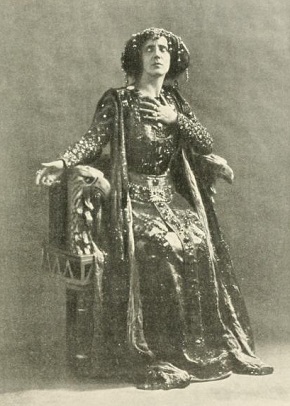
Next: Macbeth, Act 1, Scene 6 ___________ Explanatory notes below for Act 1, Scene 5 From Macbeth. Ed. Thomas Marc Parrott. New York: American Book Co. (Line numbers have been altered.) __________ With this scene a new figure appears upon the stage. It is unnecessary to repeat here what has been said in the Introduction as to the character of Lady Macbeth; but we may note the striking fashion in which that character is revealed to us. The lady enters reading a letter in which her husband tells of his encounter with the witches, and of their prophetic greeting. He has already made inquiries as to the witches, and has learned that their prophecies always come true.1 So he writes to her that she may rejoice in the greatness that is promised to her as the future queen. It is interesting to note that there is no suggestion in the letter of any criminal attempt to hasten the fulfilment of the oracle. Macbeth must have written while in the same mood of half-formed resolve to bide his time that marks the close of scene 3. But Lady Macbeth has no intention of waiting for chance to crown her. She prefers "the nearest way," that of speedy and violent action. As yet she knows nothing of the obstacle which the proclamation of Malcolm as heir-apparent puts between Macbeth and the crown. The only obstacle she sees lies in the character of her husband. He is ambitious, but is unwilling to play false to attain the objects of his ambition. Yet she is so sure of her influence over him that she prays he may return speedily, in order that she may inspire him to action and drive out any scruples that may bar the way to his goal. When she hears of Duncan's approaching visit, she realizes instantly that Fate has delivered the king into her husband's hands, and invokes the powers of evil to strengthen her for the terrible deed that must be done at once. On Macbeth's arrival she takes the matter into her own hands; she does not argue or persuade, but with quiet determination assures him that Duncan will never leave their castle alive, and that she will arrange all the details. Macbeth is, as it were, stunned by her decision. He has, indeed, meditated the murder of his master; but he has by no means decided upon it, and he would like more time for consideration. His wife, however, cuts the scene short, bidding him show a friendly face to his royal guest and leave all the rest to her. 1. From the abruptness with which the scene begins, we must fancy that Lady Macbeth has already read a part of the letter before she comes on the stage. Perhaps, when she came to the prophecy of the witches, she felt that she must be alone, and withdrew from the hall of the castle to the chamber in which the scene takes place. 2. the perfectest report, the most accurate information. 9, 10. referred me to the coming on of time, directed me to the future. 13. dues of rejoicing, the due, or natural, joy. 18. the milk of human kindness, the gentleness of humanity, of human nature. Lady Macbeth knows her husband well enough to feel sure that, however brave he is on the field of battle, he will hesitate to commit a murder. Compare Macbeth's own words when the idea of the crime enters his mind, i. 3. 134-7. 21. The illness should attend it, the wickedness, or at least the unscrupulousness, which must go along with ambition, if the ambition is to be gratified. 21, 22. what thou ... holily, the high objects which you aim at, you would like to gain innocently. 24. That which cries. The best interpretation of this much disputed passage is probably that which takes "that" as referring to Duncan's death. The passage may then be paraphrased as follows: "Thou wouldst like to have, great Glamis, that [the death of Duncan] which cries 'Thus thou must do [kill Duncan] if thou art to have it, [the crown], and that [the murder] is a thing which thou dost rather fear to do thyself than wishest to be left undone.'" 28. chastise. The accent is on the first syllable. 29. the golden rounds, the crown. 30. metaphysical, supernatural. 31. withal, with. 30. 31. doth seem ... withal, seems about to crown you with. 32. comes here to-night. It seems for the moment so impossible that the opportunity for instant action can thus be placed in her hands that Lady Macbeth exclaims that the messenger must be crazy. 34. informed for preparation, given me the news so that I might prepare. 36. had the speed of, outstripped. 38. tending, attention. 39. The raven, a bird of ill omen. 40. entrance, pronounced like a word of three syllables, "enterance." 41. Come, you spirits, etc. Note how Lady Macbeth nerves herself to meet the terrible strain of the coming night. It is plain from line 53 that she means to commit the murder herself. And that she may be strong enough in mind and body to do so, she invokes all the spirits that delight in thoughts and deeds of blood to strip her of her woman's weakness and fill her with the power of evil. Note the pause in the line before the invocation begins. 42. mortal, murderous. 44. thick, coarse, unfeeling, and so the readier for deeds of cruelty. 45. remorse, pity. 46. compunctious visitings of nature, natural feelings of pity. 47. fell, cruel. 47, 48. keep peace ... it, interpose between the "effect," i.e. the murder, and her purpose to commit it. 49. take my milk for gall, turn my kindliness (cf. line 18 above) into bitterness. 49. murdering ministers, servants, or instruments, of murder. 50. sightless substances, invisible forms. 51. nature's mischief, all that is evil in nature. 56. the all-hail hereafter. Lady Macbeth unconsciously echoes the words of the third witch in i. 3. 50. 58. This ignorant present, either "this present which is ignorant of the glory that awaits it," or "this obscure, inglorious present." The second seems somewhat the better meaning. The metre of this line is somewhat irregular. "Ignorant" must be pronounced almost like a word of two syllables; and there is a heavy stress on the words "feel" and "now" which necessitates a slight pause between them. We may scan as follows: 
59. in the instant, at this moment. 64, 65. To beguile ... like the time, in order to deceive the world, appear with a smiling face as the present occasion requires. 71. solely sovereign sway, undisputed royal power. 72-74. Macbeth is still undecided; he can neither accept nor reject the situation. His wife, however, does not deign to discuss the matter any further. She only repeats her injunction to beware of showing his thoughts in his face. 73. favour, countenance. 73, 74. To alter favour ... fear, To change the expression or the colour of one's face is always a sign of fear. Notes 1. Macbeth must have made these inquiries immediately after the encounter with the witches, and before his meeting with Duncan, since there is no reference in his letter to Duncan's approaching visit. We may imagine that Macbeth found some one at Forres who had already had dealings with the witches, and who could assure him of their credibility. ________ How to cite the explanatory notes:________ More Resources  The Chronology of Shakespeare's Plays
Establishing the Order of the Plays How Many Plays Did Shakespeare Write? Shakespeare Timeline Shakespeare's Reputation in Elizabethan England Words Shakespeare Invented Quotations About William Shakespeare Portraits of Shakespeare Shakespeare's Boss: The Master of Revels Top 10 Shakespeare Plays Shakespeare's Metaphors and Similes Shakespeare's Blank Verse Shakespeare Timeline Edward Alleyn (Actor) What is Tragic Irony? Characteristics of Elizabethan Tragedy The Chronology of Shakespeare's Plays
Establishing the Order of the Plays How Many Plays Did Shakespeare Write? Shakespeare Timeline Shakespeare's Reputation in Elizabethan England Words Shakespeare Invented Quotations About William Shakespeare Portraits of Shakespeare Shakespeare's Boss: The Master of Revels Top 10 Shakespeare Plays Shakespeare's Metaphors and Similes Shakespeare's Blank Verse Shakespeare Timeline Edward Alleyn (Actor) What is Tragic Irony? Characteristics of Elizabethan Tragedy
|
 More to Explore Macbeth: The Complete Play with Commentary The Metre of Macbeth: Blank Verse and Rhymed Lines Macbeth Character Analysis Figures of Speech in Macbeth Metaphors in Macbeth (Biblical) The Theme of Macbeth Is Macbeth the Third Murderer? Macbeth, Duncan and Shakespeare's Changes King James I and Shakespeare's Sources for Macbeth Contemporary References to King James I in Macbeth The Royal Patent that Changed Shakespeare's Life Soliloquy Analysis: If it were done when 'tis done (1.7.1-29) Soliloquy Analysis: Is this a dagger (2.1.33-61) Soliloquy Analysis: To be thus is nothing (3.1.47-71) Soliloquy Analysis: She should have died hereafter (5.5.17-28) Differences Between Macbeth and Lady Macbeth Explanatory Notes for Lady Macbeth's Soliloquy (1.5) The Psychoanalysis of Lady Macbeth (Sleepwalking Scene) Is Lady Macbeth's Swoon Real?
Explanatory Notes for the Witches' Chants (4.1) Macbeth Plot Summary (Acts 1 and 2) Macbeth Plot Summary (Acts 3, 4 and 5) How to Stage a Production of Macbeth (Scene Suggestions) A Comparison of Macbeth and Hamlet The Effect of Lady Macbeth's Death on Macbeth The Curse of Macbeth Shakespeare's Sources for Macbeth Macbeth Q & A Essay Topics on Macbeth Aesthetic Examination Questions on Macbeth What is Tragic Irony? Stages of Plot Development in Macbeth Time Analysis of the Action in Macbeth Macbeth Study Quiz (with detailed answers) Quotations from Macbeth (Full) Top 10 Quotations from Macbeth Crafting a Sympathetic Macbeth The Moral Character of Macbeth Origin of the Weird Sisters Temptation, Sin, Retribution: Lecture Notes on Macbeth Untie the winds: Exploring the Witches' Control Over Nature Characteristics of Elizabethan Tragedy
Why Shakespeare is so Important Shakespeare's Language Shakespeare's Influence on Other Writers |
©1999-2021 Shakespeare Online. All Rights Reserved.