| directory |
| home | contact |
|
|||||||||||||||
| search | |||||||||||||||
|
Hamlet's Soliloquy: Now might I do it pat, now he is praying (3.3)
Commentary Hamlet has thought himself prepared to "drink hot blood" (3.2.382) and carry out the murder of the King. Now, as he happens upon the unattended Claudius, the time has come to take action, but Hamlet finds that he is unable to kill. Hamlet's reason for delay is that Claudius is in the midst of praying, and in order for revenge to be complete, the King must be engaged in some sinful act such as sex, gambling, or drinking, and thus be condemned to eternal damnation. While it is true that similar reasoning is common in other revenge plays, such vengence seems unworthy of our noble prince. Many critics believe that Hamlet uses Claudius's prayer as an excuse for further delay because his conscience will not allow him to commit premeditated murder. Others claim that it is not Hamlet's altruism which saves Claudius in this scene, but his own paralyzing habit of "thinking too precisely on th'event" (4.4.41). However, the second argument is moot because the basis of his procrastination is his inability to commit premeditated murder. Ironically, Hamlet's soliloquy is ultimately irrelevant, for Claudius is not sincerely repentant, as he reveals in the concluding couplet of scene 3: My words fly up, my thoughts remain below: Questions for Review 1. Morris LeRoy Arnold, in his book The Soliloquies of Shakespeare, argues that Claudius' soliloquy is similar to King Henry's prayer before battle in Henry V (4.1.306-322). They both "give the impression of rhetorical pageantry rather than sincere contrition." Is this a fair statement? 2. Do you feel sympathy for Claudius? 3. In Kenneth Branagh's Hamlet (1996), Claudius is sitting in a confessional and Hamlet is on the other side with his dagger drawn. If you were producing the play, how would you stage Hamlet finding Claudius at prayer? 4. Do you agree with A. C. Bradley that the turning-point of the drama is Hamlet's refusal to kill Claudius while he is praying? Bradley argues Hamlet's failure there "is the cause of all the disasters that follow. In sparing the King, he sacrifices Polonius, Ophelia, Rosencantz and Guildnestern, Laertes, and the Queen and himself" (Shakespearean Tragedy, p. 108). Back to Soliloquy Annotations How to cite this article: _______ Even More...  Hamlet's Silence An Excuse for Doing Nothing: Hamlet's Delay Foul Deeds Will Rise: Hamlet and Divine Justice Defending Claudius - The Charges Against the King Shakespeare's Fools: The Grave-Diggers in Hamlet Hamlet's Humor: The Wit of Shakespeare's Prince of Denmark All About Yorick Hamlet's Melancholy: The Transformation of the Prince Hamlet's Antic Disposition: Is Hamlet's Madness Real? The Significance of the Ghost in Armor The Significance of Ophelia's Flowers Ophelia and Laertes Mistrusted Love: Ophelia and Polonius Divine Providence in Hamlet What is Tragic Irony? Seneca's Tragedies and the Elizabethan Drama Shakespeare's Sources for Hamlet Characteristics of Elizabethan Tragedy
Why Shakespeare is so Important Shakespeare's Language Shakespeare's Influence on Other Writers Daily Life in Shakespeare's London Life in Stratford (structures and guilds) Life in Stratford (trades, laws, furniture, hygiene) Stratford School Days: What Did Shakespeare Read? Games in Shakespeare's England [A-L] Games in Shakespeare's England [M-Z] An Elizabethan Christmas Clothing in Elizabethan England Queen Elizabeth: Shakespeare's Patron King James I of England: Shakespeare's Patron The Earl of Southampton: Shakespeare's Patron Going to a Play in Elizabethan London Ben Jonson and the Decline of the Drama Publishing in Elizabethan England Shakespeare's Audience Religion in Shakespeare's England Alchemy and Astrology in Shakespeare's Day Entertainment in Elizabethan England London's First Public Playhouse Shakespeare Hits the Big Time Hamlet's Silence An Excuse for Doing Nothing: Hamlet's Delay Foul Deeds Will Rise: Hamlet and Divine Justice Defending Claudius - The Charges Against the King Shakespeare's Fools: The Grave-Diggers in Hamlet Hamlet's Humor: The Wit of Shakespeare's Prince of Denmark All About Yorick Hamlet's Melancholy: The Transformation of the Prince Hamlet's Antic Disposition: Is Hamlet's Madness Real? The Significance of the Ghost in Armor The Significance of Ophelia's Flowers Ophelia and Laertes Mistrusted Love: Ophelia and Polonius Divine Providence in Hamlet What is Tragic Irony? Seneca's Tragedies and the Elizabethan Drama Shakespeare's Sources for Hamlet Characteristics of Elizabethan Tragedy
Why Shakespeare is so Important Shakespeare's Language Shakespeare's Influence on Other Writers Daily Life in Shakespeare's London Life in Stratford (structures and guilds) Life in Stratford (trades, laws, furniture, hygiene) Stratford School Days: What Did Shakespeare Read? Games in Shakespeare's England [A-L] Games in Shakespeare's England [M-Z] An Elizabethan Christmas Clothing in Elizabethan England Queen Elizabeth: Shakespeare's Patron King James I of England: Shakespeare's Patron The Earl of Southampton: Shakespeare's Patron Going to a Play in Elizabethan London Ben Jonson and the Decline of the Drama Publishing in Elizabethan England Shakespeare's Audience Religion in Shakespeare's England Alchemy and Astrology in Shakespeare's Day Entertainment in Elizabethan England London's First Public Playhouse Shakespeare Hits the Big Time
|
Hamlet: The Complete Play with Explanatory Notes Notes on Act 3, Scene 3 and Study Questions The Hamlet and Ophelia Subplot The Norway Subplot in Hamlet Hamlet Basics Hamlet: Plot Summary with Key Passages Analysis of the Characters in Hamlet Deception in Hamlet Problem Plays and Revenge Tragedy
The Purpose of The Murder of Gonzago The Dumb-Show: Why Hamlet Reveals his Knowledge to Claudius Hamlet's Relationship with the Ghost Philological Examination Questions on Hamlet Quotations from Hamlet (with commentary) Hamlet Study Quiz (with detailed answers) Analysis of I am sick at heart (1.1) Hamlet: Q & A
Soliloquy Analysis: O this too too... (1.2) Soliloquy Analysis: O, what a rogue and peasant slave am I!... (2.2) Soliloquy
Analysis: To be, or not to be... (3.1) Soliloquy Analysis: Tis now the very witching time of night... (3.2) Soliloquy Analysis: Now might I do it pat... (3.3) Soliloquy Analysis: How all occasions do inform against me... (4.4) Ophelia's Burial and Christian Rituals The Baker's Daughter: Ophelia's Nursery Rhymes Hamlet as National Hero The Elder Hamlet: The Kingship of Hamlet's Father Claudius and the Condition of Denmark In Secret Conference: The Meeting Between Claudius and Laertes O Jephthah - Toying with Polonius The Death of Polonius and its Impact on Hamlet's Character Blank Verse and Diction in Shakespeare's Hamlet |
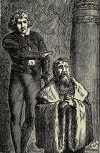 Hamlet's irresolution arises from his morality. Goethe spoke of Hamlet's "lovely, pure, noble, and most moral nature." He cannot kill Claudius in cold blood. The Ghost has demanded an action abhorrent to his very soul. Even with the proof of Claudius' guilt, his heated soliloquy seems mere "
©1999-2021 Shakespeare Online. All Rights Reserved.