Shakespeare's Sources
Tragedies
 Antony and Cleopatra Antony and Cleopatra
Coriolanus
Hamlet
Julius Caesar
King Lear
Macbeth
Othello
Romeo and Juliet
Timon of Athens
Titus Andronicus
Histories
Henry IV, Part I
Henry IV, Part II
Henry V
Henry VI, Part I
Henry VI, Part II
Henry VI, Part III
Henry VIII
King John
Richard II
Richard III
Comedies
All's Well That Ends Well
As You Like It
The Comedy of Errors
Cymbeline
Love's Labours Lost
Measure for Measure
The Merry Wives of Windsor
The Merchant of Venice
A Midsummer Night's Dream
Much Ado About Nothing
Pericles, Prince of Tyre
The Taming of the Shrew
The Tempest
Troilus and Cressida
Twelfth Night
Two Gentlemen of Verona
The Winter's Tale
______
Bard Bites
So great was the Elizabethan demand for wigs made from human hair that "children with handsome locks were never allowed to walk alone in the London streets for fear they should be temporarily kidnapped and their tresses cut off." Read on...
____
Most early editors removed five lines from Romeo and Juliet for the sake of common decency. Which lines caused such scandal? Find out...
____
One of England's greatest writers, and a friend of William Shakespeare, killed the leader of the acting troupe The Admiral's Men, Gabriel Spencer. Who was he?
|
|
Related Resources
The Essential Shakespeare Timeline
List of Elizabethan Theatres
Theatrical Allusions in As You Like It
How to Study Shakespeare
How to Analyze a Shakespearean Sonnet
Shakespeare's Blank Verse
Going to a Play in Elizabethan London
Entertainment in Elizabethan England
Shocking Elizabethan Drama
The King's Men
Shakespeare Characters A to Z
Top 10 Shakespeare Plays
Shakespeare's Audience in his Day
Going to a Play in Shakespeare's London
Shakespeare's Metaphors and Similes
Shakespeare on Old Age
Shakespeare's Heroines
Shakespeare's Attention to Details
Shakespeare's Portrayals of Sleep
Words Shakespeare Invented
Shakespeare's Impact on Other Writers
What Inspired Shakespeare?
Reasons Behind Shakespeare's Influence
The First Publication of King Lear
The Fool in King Lear and his Function in the Play
Play Chronology
Shakespeare's Settings
The First Folio
Shakespeare's Edward III?
Shakespeare and Psalm 46
Were women allowed on the Elizabethan stage?
______
On Shakespeare's Mind
"Shakespeare's mind may best be likened to a highly sensitised photographic plate, which need only be exposed for the hundredth part of a second to anything in life or literature, in order to receive upon its surface the firm outline of a picture which could be developed and reproduced at will. If Shakespeare's mind for the hundredth part of a second came in contact in an alehouse with a burly good-humoured toper, the conception of a Falstaff found instantaneous admission to his brain. The character had revealed itself to him in most of its involutions, as quickly as his eye caught sight of its external form, and his ear caught the sound of the voice."
Sidney Lee, Great Englishmen of the Sixteenth Century
|
|
In the Spotlight
The Importance of King Leir
 The story of King Lear and his three daughters is an old tale, well known in England for centuries before Shakespeare wrote the definitive play on the subject. The first English account of Lear can be found in the History of the Kings of Britain, written by Geoffrey Monmouth in 1135. However, it is clear that Shakespeare relied chiefly on King Leir, an anonymous play published twelve years before the first recorded performance of Shakespeare's King Lear. Read on to find out more about Leir and see side-by-side versions of Leir and Shakespeare's masterpiece. The story of King Lear and his three daughters is an old tale, well known in England for centuries before Shakespeare wrote the definitive play on the subject. The first English account of Lear can be found in the History of the Kings of Britain, written by Geoffrey Monmouth in 1135. However, it is clear that Shakespeare relied chiefly on King Leir, an anonymous play published twelve years before the first recorded performance of Shakespeare's King Lear. Read on to find out more about Leir and see side-by-side versions of Leir and Shakespeare's masterpiece.
______
|
The Danish History
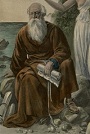 "Shakespeare derived from Saxo's Amleth (Hamlet) the
story from which he composed his immortal tragedy. Saxo, however, represents Hamlet as having been twice married, first to a daughter of the King of Britain, whose name does not appear, whom he abandoned to espouse Hermutrude, Queen of the Scots" [Oliver Elton, The Nine Books of the Danish History]. Find out more and read the two books of the Danish History upon which Hamlet is based. "Shakespeare derived from Saxo's Amleth (Hamlet) the
story from which he composed his immortal tragedy. Saxo, however, represents Hamlet as having been twice married, first to a daughter of the King of Britain, whose name does not appear, whom he abandoned to espouse Hermutrude, Queen of the Scots" [Oliver Elton, The Nine Books of the Danish History]. Find out more and read the two books of the Danish History upon which Hamlet is based.
______
|
|