Quotations by Play
Tragedies
 Antony and Cleopatra Antony and Cleopatra
Coriolanus
Hamlet
Julius Caesar
King Lear
Macbeth
Othello
Romeo and Juliet
Timon of Athens
Titus Andronicus
Histories
Henry IV, Part I
Henry IV, Part II
Henry V
Henry VI, Part I
Henry VI, Part II
Henry VI, Part III
Henry VIII
King John
Richard II
Richard III
Comedies
All's Well That Ends Well
As You Like It
The Comedy of Errors
Cymbeline
Love's Labours Lost
Measure for Measure
The Merry Wives of Windsor
The Merchant of Venice
A Midsummer Night's Dream
Much Ado About Nothing
Pericles, Prince of Tyre
The Taming of the Shrew
The Tempest
Troilus and Cressida
Twelfth Night
Two Gentlemen of Verona
The Winter's Tale
_______
|
Quotations by Theme
Shakespeare on Anger
Shakespeare on Envy
Shakespeare on Fate
Shakespeare on Fathers
Shakespeare on Flowers
Shakespeare on Friendship
Shakespeare on Gluttony
Shakespeare on Greed
Shakespeare on Horses
Shakespeare on Jealousy
Shakespeare on Lawyers
Shakespeare on Lust
Shakespeare on Marriage
Shakespeare's Metaphors
Shakespeare on Music
Shakespeare on Old Age
Shakespeare on Omens
Shakespeare on Poverty
Shakespeare on Pride
Shakespeare on Revenge
Shakespeare on the Seasons
Shakespeare on Sleep
Shakespeare on Sloth
Shakespeare's Songs
Shakespeare on Swans
Shakespeare Wedding Readings
Scary Shakespeare
Shakespearean Insults
Shakespeare Quotes on Cain and Abel
Quotations About Shakespeare
_______
On Shakespeare's Heroines
"Shakespeare reserves all his adoration for his heroines. His good women are angelic beings. His young heroines, Miranda, Cordelia, Imogen,
Juliet, Perdita seem all to be spirits of the same
heaven, and are like different aspects of the same
woman rather than different women: they are the
quintessence of romanticism. His heroines of mature years, as for instance, Hermione (in A Winter's Tale), and Queen Katherine, have the same quality. He cannot refrain from throwing a dash of connubial romance into Cleopatra."
John Jay Chapman, A Glance Toward Shakespeare
___
On Shakespeare's Genius
"It may be reckoned one of the rarest pieces of good-luck that ever fell to the share of a race, that (as was true of Shakespeare) its most rhythmic genius, its acutest intellect, its profoundest imagination, and its healthiest understanding should have been combined in one man, and that he should
have arrived at the full development of his powers at the moment when the material in which he was to work — that wonderful composite called English, the
best result of the confusion of tongues — was in its freshest perfection."
James Russell Lowell, Literary Essays, Vol. 3, 1890
|
|
In the Spotlight
Top 10 Quotes from Julius Caesar
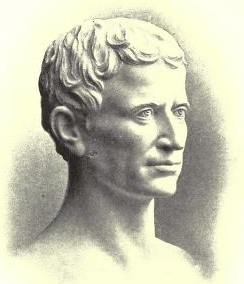 Cowards die many times before their deaths; Cowards die many times before their deaths;
The valiant never taste of death but once.
Julius Caesar (2.2), Cæsar
Although there were earlier Elizabethan plays on the subject of Julius Caesar and his turbulent rule, Shakespeare's penetrating study of political life in ancient Rome is the only version to recount the demise of Brutus and the other conspirators. Here are the top ten quotations from Julius Caesar.
_______
|
Shakespeare on Lawyers and the Law
 The first thing we do, let's kill all the lawyers. The first thing we do, let's kill all the lawyers.
Richard II (2.4), Captain
Shakespeare mentions law more than any other profession. Although we assume Shakespeare did not formally study law, we see from the many references in the plays that he had acquired a significant general knowledge of legal terminology. The legal jargon in Hamlet's speech in Act 5 is especially impressive. Read on...
_______
|
Shakespeare on Love
 My bounty is as boundless as the sea,
My love as deep; the more I give to thee,
The more I have, for both are infinite.
Romeo and Juliet, 2.2
Here is our collection of Shakespeare's most inspired and romantic passages on love and devotion.
|
What Shakespeare Didn't Say
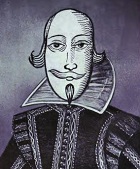 Granted, Shakespeare gave us more memorable quotes than any other writer, but often he gets credit for the clever quips of other greats, like Ben Franklin and John Milton. Here are some of the most common words of wisdom mistakenly attributed to the Bard. Granted, Shakespeare gave us more memorable quotes than any other writer, but often he gets credit for the clever quips of other greats, like Ben Franklin and John Milton. Here are some of the most common words of wisdom mistakenly attributed to the Bard.
|
|