Richard III
Please see the bottom of this page for full explanatory notes.
| ACT I SCENE I | London. A street. | |
| | Enter GLOUCESTER, solus. | |
| GLOUCESTER | Now is the winter of our discontent | |
| | Made glorious summer by this sun of York; | |
| | And all the clouds that lower'd upon our house | |
| | In the deep bosom of the ocean buried. |
| | Now are our brows bound with victorious wreaths; | |
| | Our bruised arms hung up for monuments; | |
| | Our stern alarums chang'd to merry meetings, | |
| | Our dreadful marches to delightful measures. | |
| | Grim-visag'd war hath smooth'd his wrinkled front; |
| | And now, instead of mounting barbed steeds | | 10 |
| | To fright the souls of fearful adversaries, | |
| | He capers nimbly in a lady's chamber | |
| | To the lascivious pleasing of a lute. | |
| | But I, that am not shaped for sportive tricks, |
| | Nor made to court an amorous looking-glass; | |
| | I, that am rudely stamp'd, and want love's majesty | |
| | To strut before a wanton, ambling nymph; | |
| | I, that am curtail'd of this fair proportion, | |
| | Cheated of feature by dissembling nature, |
| | Deform'd, unfinish'd, sent before my time | | 20 |
| | Into this breathing world, scarce half made up,-- | |
| | And that so lamely and unfashionable | |
| | That dogs bark at me as I halt by them; | |
| | Why, I, in this weak piping time of peace, |
| | Have no delight to pass away the time, | |
| | Unless to spy my shadow in the sun | |
| | And descant on mine own deformity: | |
| | And therefore, since I cannot prove a lover, | |
| | To entertain these fair well-spoken days, |
| | I am determined to prove a villain | | 30 |
| | And hate the idle pleasures of these days. | |
| | Plots have I laid, inductions dangerous, | |
| | By drunken prophecies, libels and dreams, | |
| | To set my brother Clarence and the king |
| | In deadly hate the one against the other: | |
| | And if King Edward be as true and just | |
| | As I am subtle, false and treacherous, | |
| | This day should Clarence closely be mew'd up, | |
| | About a prophecy, which says that G |
| | Of Edward's heirs the murderer shall be. | | 40 |
| | Dive, thoughts, down to my soul: -- here | |
| | Clarence comes. | |
| | Enter CLARENCE, guarded, and BRAKENBURY. | |
| | Brother, good-day; what means this armed guard | |
| | That waits upon your grace? |
| CLARENCE | His majesty | |
| | Tendering my person's safety, hath appointed
| |
| | This conduct to convey me to the Tower. | |
| GLOUCESTER | Upon what cause? | |
| CLARENCE | Because my name is George. |
| GLOUCESTER | Alack, my lord, that fault is none of yours; | |
| | He should, for that, commit your godfathers: | |
| | O, belike his majesty hath some intent | | 49 |
| | That you shall be new-christen'd in the Tower. | |
| | But what's the matter, Clarence? may I know? |
| CLARENCE | Yea, Richard, when I know; for I protest | |
| | As yet I do not: but, as I can learn, | |
| | He hearkens after prophecies and dreams; | |
| | And from the cross-row plucks the letter G. | | 55 |
| | And says a wizard told him that by G |
| | His issue disinherited should be; | |
| | And, for my name of George begins with G, | |
| | It follows in his thought that I am he. | |
| | These, as I learn, and such like toys as these | | 60 |
| | Have moved his highness to commit me now. |
| GLOUCESTER | Why, this it is, when men are ruled by women: | |
| | 'Tis not the king that sends you to the Tower: | |
| | My Lady Grey his wife, Clarence, 'tis she | | 64 |
| | That tempers him to this extremity. | |
| | Was it not she and that good man of worship, |
| | Anthony Woodville, her brother there, | |
| | That made him send Lord Hastings to the Tower, | |
| | From whence this present day he is deliver'd? | |
| | We are not safe, Clarence; we are not safe. | |
| CLARENCE | By heaven, I think there's no man is secure |
| | But the queen's kindred and night-walking heralds | |
| | That trudge betwixt the king and Mistress Shore. | |
| | Heard ye not what an humble suppliant | |
| | Lord hastings was to her for his delivery? | |
| GLOUCESTER | Humbly complaining to her deity |
| | Got my lord chamberlain his liberty. | |
| | I'll tell you what; I think it is our way, | |
| | If we will keep in favour with the king, | |
| | To be her men and wear her livery: | | 80 |
| | The jealous o'erworn widow and herself, |
| | Since that our brother dubb'd them gentlewomen. | |
| | Are mighty gossips in this monarchy. | |
| BRAKENBURY | I beseech your graces both to pardon me; | |
| | His majesty hath straitly given in charge | |
| | That no man shall have private conference, |
| | Of what degree soever, with his brother. | |
| GLOUCESTER | Even so; an't please your worship, Brakenbury, | | 88 |
| | You may partake of any thing we say: | |
| | We speak no treason, man: we say the king | |
| | Is wise and virtuous, and his noble queen |
| | Well struck in years, fair, and not jealous; | |
| | We say that Shore's wife hath a pretty foot, | |
| | A cherry lip, a bonny eye, a passing pleasing tongue; | |
| | And that the queen's kindred are made gentle-folks: | |
| | How say you sir? Can you deny all this? |
| BRAKENBURY | With this, my lord, myself have naught to do. | |
| GLOUCESTER | Naught to do with mistress Shore! I tell thee, fellow, | |
| | He that doth naught with her, excepting one, | |
| | Were best he do it secretly, alone. | | 100 |
| BRAKENBURY | What one, my lord? |
| GLOUCESTER | Her husband, knave: wouldst thou betray me? | |
| BRAKENBURY | I beseech your grace to pardon me, and withal | |
| | Forbear your conference with the noble duke. | |
| CLARENCE | We know thy charge, Brakenbury, and will obey. | |
| GLOUCESTER | We are the queen's abjects, and must obey. |
| | Brother, farewell: I will unto the king; | |
| | And whatsoever you will employ me in, | |
| | Were it to call King Edward's widow sister, | |
| | I will perform it to enfranchise you. | | 110 |
| | Meantime, this deep disgrace in brotherhood |
| | Touches me deeper than you can imagine. | |
| CLARENCE | I know it pleaseth neither of us well. | |
| GLOUCESTER | Well, your imprisonment shall not be long; | |
| | Meantime, have patience. | |
| CLARENCE | I must perforce. Farewell. |
| | Exeunt CLARENCE, BRAKENBURY, and Guard. | |
| GLOUCESTER | Go, tread the path that thou shalt ne'er return. | |
| | Simple, plain Clarence! I do love thee so, | |
| | That I will shortly send thy soul to heaven, | |
| | If heaven will take the present at our hands. | | 120 |
| | But who comes here? the new-deliver'd Hastings? |
| | Enter HASTINGS. | |
| HASTINGS | Good time of day unto my gracious lord! | |
| GLOUCESTER | As much unto my good lord chamberlain! | |
| | Well are you welcome to the open air. | |
| | How hath your lordship brook'd imprisonment? | |
| HASTINGS | With patience, noble lord, as prisoners must: |
| | But I shall live, my lord, to give them thanks | |
| | That were the cause of my imprisonment. | |
| GLOUCESTER | No doubt, no doubt; and so shall Clarence too; | |
| | For they that were your enemies are his, | |
| | And have prevail'd as much on him as you. |
| HASTINGS | More pity that the eagle should be mew'd, | |
| | While kites and buzzards prey at liberty. | |
| GLOUCESTER | What news abroad? | |
| HASTINGS | No news so bad abroad as this at home; | |
| | The King is sickly, weak and melancholy, |
| | And his physicians fear him mightily. | | 137 |
| GLOUCESTER | Now, by Saint Paul, this news is bad indeed. | |
| | O, he hath kept an evil diet long, | |
| | And overmuch consumed his royal person: | |
| | 'Tis very grievous to be thought upon. |
| | What, is he in his bed? | |
| HASTINGS | He is. | |
| GLOUCESTER | Go you before, and I will follow you. | |
| | Exit HASTINGS. | |
| | He cannot live, I hope; and must not die | |
| | Till George be pack'd with post-horse up to heaven. |
| | I'll in, to urge his hatred more to Clarence, | |
| | With lies well steel'd with weighty arguments; | | 147 |
| | And, if I fall not in my deep intent, | |
| | Clarence hath not another day to live: | |
| | Which done, God take King Edward to his mercy, |
| | And leave the world for me to bustle in! | |
| | For then I'll marry Warwick's youngest daughter. | |
| | What though I kill'd her husband and her father? | | 153 |
| | The readiest way to make the wench amends | |
| | Is to become her husband and her father: |
| | The which will I; not all so much for love | |
| | As for another secret close intent, | |
| | By marrying her which I must reach unto. | |
| | But yet I run before my horse to market: | |
| | Clarence still breathes; Edward still lives and reigns: |
| | When they are gone, then must I count my gains. | |
| | Exit | |
Richard III, Act 1, Scene 2
______
Explanatory Notes for Act 1, Scene 1
From King Richard III. Ed. Brainerd Kellogg. New York: Clark & Maynard.
Abbreviations. — A.-S. = Anglo-Saxon: M.E. = Middle
English (from the 13th to the 15th century) ; Fr. = French ;
Ger. = German ; Gr. = Greek ; Cf. = compare (Lat. confer) ;
Abbott refers to the excellent Shakespearean Grammar of Dr.
Abbott; Schmidt, to Dr. Schmidt's invaluable Shakespeare Lexicon.
2. Sun of York, an allusion to the cognizance of Edward IV — a blazing sun, adopted by him in memory of the three
suns which appeared the day before the battle of Mortimer's Cross, fought in 1461.
6. The helmet which Henry V wore at Agincourt still hangs over his tomb in Westminster Abbey.
7. Alarums, calls to arms, as by beat of drum, or trumpet call. Italian all'arme, to arms! from Lat. ad ilia arma, to those arms! to your arms!
8. Measures, grave and formal dances.
10. Barbed, armed and harnessed. The word is a corruption of barded, through Fr., from Lat. bardatus.
11. Fearful, full of fear. It is now used only in an active
sense, as causing fear.
12. He, war, personified as a soldier. Capers, dances or leaps like a goat. Lat. capra, a she-goat.
13. Lute, a stringed musical instrument, somewhat like a
guitar.
18. Proportion, form or shape.
19. Feature, the whole outward form.
21. Made up, finished, completed.
22. Unfashionable, an adverb. Sometimes when two adverbs are joined together by and, the -ly of the one is
omitted, the one termination serving for both. Cf. Julius Caesar, II. i. 224: "Good gentlemen, look fresh and merrily."
24. Piping time. The tabor and the pipe were emblems of
peace, as opposed to the drum and the fife, emblems of war.
27. Descant, to comment. The word was originally a musical term, and was applied to a variation upon the plain
song, or simple melody.
29. Entertain, to pass agreeably.
32. Inductions, the beginnings of mischief.
33. Libels, defamatory writings. M.E. libel, a brief piece of writing, from Lat. libellus, a little book, a notice.
36. As true and just, and therefore the less suspicious of
foul play on my part.
38. Mew'd up, shut up, imprisoned. The word mew (Old Fr. mue, from Lat. mutare, to change) meant originally a moulting-place, a cage for hawks while mewing or moulting.
Cf. Chaucer's Squieres Tale (line 643): "And by her beddes heed she made a mewe."
39. Prophecy. Some have reported, that the cause of this noble mans death rose of a foolish prophesie, which was,
that after K. Edward one should reigne, whose first letter of his name should be a G. Wherewith the king and queene
were sore troubled, and began to conceiue a greeuous grudge against this duke, and could not be in quiet till they had
brought him to his end. And as the diuell is woont to incumber the minds of men which delite in such diuelish
fantasies, they said afterward, that that prophesie lost not his effect, when after king Edward Glocester usurped his
kingdome. (Holinshed.)
49. Belike, probably.
55. Cross-row, the alphabet, so named because a cross was
formerly placed at the beginning, called also Christ-cross-row.
58. For = because.
60. Toys, idle fancies, foolish causes.
62. This it is, this is the consequence.
64. My Lady Grey. Elizabeth Woodville, the widow of Sir John Grey, who was killed at the second battle of St.
Albans, in 1461. Edward IV married her in 1464.
60. Worship, dignity.
72. Heralds, messengers. Old Fr. heralt, a word of Teutonic origin; Old Ger. herolt (modern Ger. herold), for hari-wald, army strength, a name for a warrior; hari (modern Ger.
heer), an army, and walt, (modern Ger. g-walt), strength.
73. Mistress Shore, the celebrated mistress of Edward IV. Her husband, whom she deserted for the king, was a
wealthy London merchant. After the death of her royal paramour, she fell into great poverty and distress, and, according to tradition, died miserably in a ditch, known ever after as Shoreditch.
77. Chamberlain. Lord Hastings was created Lord Chamberlain by Edward IV soon alter his coronation. He had
been imprisoned in the Tower for a short time during Edward's reign, by the instigation of the queen's family.
78. Our way, our best course.
80. Livery, the distinctive dress worn by retainers or servants, so called because delivered or given out at regular
periods. Fr. livree, past participle of livrer, to deliver, from Lat. liberare, to set free, give freely.
81. O'er-worn, worn-out, faded. The queen, however, was
now (1471) only thirty-four years of age, five years older than
the king.
83. Gossip, a term conveying a sense of contempt. The word meant originally a sponsor at baptism, and from signifying those who were associated in the festivities of a christening, it came to denote generally those who were accustomed to make merry together. M.E. gossib, also godsib, related in God, from God, God, and sib, related. The word
sib is still current in Scotland in the sense of related.
88. An 't, if it.
89. Partake, share in the hearing of.
94. Passing, exceedingly, an adverb.
99. Naught, from A.-S. nawiht, also naht, made up of na, not
and wiht, a whit. Its derivative naught-y means literally
naught-like, therefore worthless, bad.
100. The phrases I were best, thou were best, he were best, are due to an old impersonal idiom: me were liefer = it
would be most pleasant to me, me were loth, him were better, etc.
107. I will unto the king. This ellipsis of the verb of motion after will or is, is very common; see in the present play, I. i. 116; II. iv. 66; III. ii. 31: IV. iv. 6; V. iii. 46. See Abbott's
Shakespearean Grammar, sect. 405.
115. Lie, lie in prison, either in your stead, or as a consequence of my exertions in your behalf.
116. An allusion to the old proverb, "Patience, perforce is
medicine to a mad dog."
122. Good time of day, a common form of salutation.
131. Prevail'd = had influence.
137. Fear = fear for him.
139. Diet = the whole method of life.
145. George, the Duke of Clarence. Posthorse, used as an
emblem for swiftness.
147. Steel'd, strengthened or supported.
152. The youngest daughter of the Earl of Warwick was Anne, who was married, perhaps merely betrothed, to Edward, son of Henry VI. She is incorrectly spoken of as the eldest daughter in Henry VI, Part III., III. iii. 242.
153. Shakespeare follows the traditional account, which makes it Richard who stabbed to death the young prince
after the battle of Tewksbury, and in Henry VI, Part III, V. v. 39, he is represented as actually murdering him. In I.
iv. 56, it is ascribed to Clarence on the best authority — that of the ghost of the murdered man. Richard does not mean to
claim that he killed Warwick actually with his own hand at the battle of Barnet, but that, as he led the vanguard of
King Edward's army, and had the principal share of the battle, the great kingmaker's death was indirectly due to
him.
156. The which. Which being an adjective, frequently accompanies the repeated antecedent, where definiteness is
desired, or where care must be taken to select the right antecedent. This repetition is more common with the definite the which. Cf. Henry IV, Part I., V. iv. 121: "The
better part of valor is discretion; in the which better part I
have saved my life."
157. Referring to his design upon the crown, but it is difficult to understand how his marriage with Anne could help
him in this ambition.
It might, however, procure him a share in the immense estates of the lady's father, Richard Neville, the great Earl
of Warwick, known in history as the "king-maker," the "setter-up and puller-down of kings," as Shakespeare puts it.
How to cite the explanatory notes:
Shakespeare, William. Richard III. Ed. Brainerd Kellogg. New York: Clark & Maynard, 1886. Shakespeare Online. 22 Dec. 2011. < http://www.shakespeare-online.com/plays/richardiii_1_1.html >.
______
Related Articles
 Richard III: Plot Summary Richard III: Plot Summary
Richard III: Q & A
Famous Quotes from Richard III
Shakespeare's Sources for Richard III
Why Shakespeare is so Important
Shakespeare's Language
Shakespeare's Boss: The Master of Revels
|
Textual Notes
 "[Richard III] is distinguished by the extraordinary divergence of the text of the Quarto of 1597 from that of the Folio. Were this divergence confined solely to verbal changes, the editor would be guided in the task of forming a composite text either by his own personal preference or by the consensus of opinion of his predecessors; but the divergences here are so wide that no such guide avail him. There are many consecutive lines in the Folio whereof there are no traces in the Quarto, and again there are similar lines in the Quartos which are omitted in the Folio." (Horace Howard Furness. Variorum Edition of Shakespeare)
|
Notes on Shakespeare...
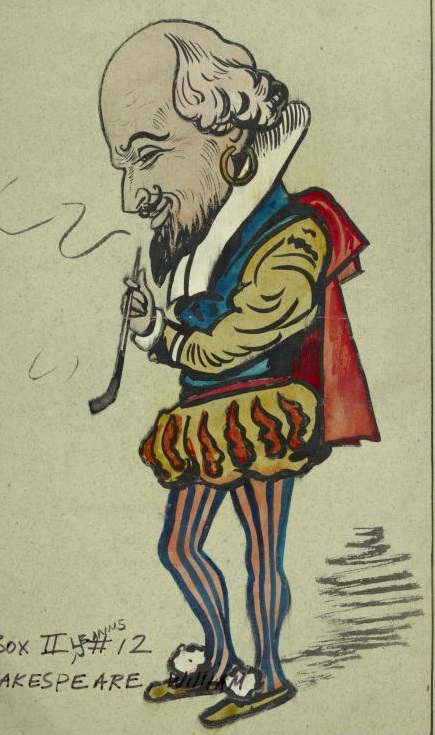 Richard Shakespeare, Shakespeare's paternal grandfather, was a farmer in the small village of Snitterfield, located four miles from Stratford. Records show that Richard worked on several different farms which he leased from various landowners. Coincidentally, Richard leased land from Robert Arden, Shakespeare's maternal grandfather. Read on...
____
Shakespeare acquired substantial wealth thanks to his acting and writing abilities, and his shares in London theatres. The going rate was £10 per play at the turn of the sixteenth century. So how much money did Shakespeare make? Read on...
Henry Bolingbroke, the eldest son of John of Gaunt and the grandson of King Edward III, was born on April 3, 1367. Henry usurped the throne from the ineffectual King Richard II in 1399, and thus became King Henry IV, the first of the three kings of the House of Lancaster. Read on...
____
Known to the Elizabethans as ague, Malaria was a common malady spread by the mosquitoes in the marshy Thames. The swampy theatre district of Southwark was always at risk. King James I had it; so too did Shakespeare's friend, Michael Drayton. Read on...
____
Shakespeare was familiar with seven foreign languages and often quoted them directly in his plays. His vocabulary was the largest of any writer, at over twenty-four thousand words. Read on...
|
|